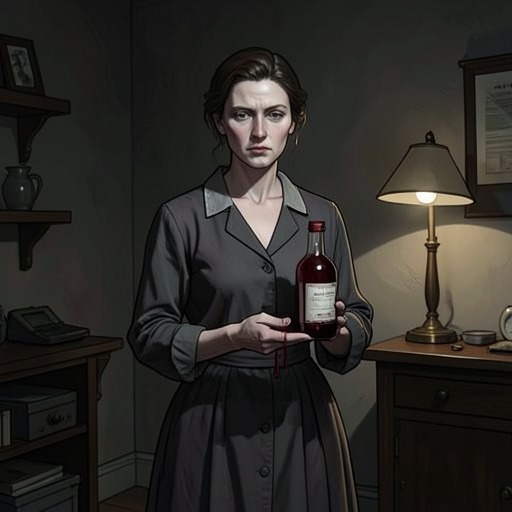
Clara’s intense blood-thirst episode at Topshop
The RadleysClara Radley’s intense blood-thirst episode at Topshop shows how the aftermath of killing Stuart Harper follows her into an ordinary public space. A smell of blood, first noticed on the bus into town, triggers the memory of the previous night and draws Clara toward the people around her. She recognizes the danger just before acting, but her attempt to flee leads to a confrontation with a security guard in an alley. When she uses her fangs to frighten him into letting go, the immediate threat changes: Clara is no longer only afraid of what her craving might make her do, but also of the power she has discovered in herself.
Trigger and Recognition
On the journey into town, Clara notices an unfamiliar, rich odor aboard the crowded number 6 bus. The opening of the doors and the arrival of fresh air bring temporary relief. In the changing rooms at Topshop, however, the smell returns and overwhelms her. Its force is connected to the previous night: it calls up her memory of killing Stuart Harper and the intense feeling she experienced then. Clara cannot separate her horror at what she did from her awareness that the experience might draw her back. The episode therefore begins not with a deliberate decision to seek blood, but with a reminder that makes the past feel immediately present.
Clara identifies the smell as blood inside the bodies of the shoppers undressing nearby. Among them is a girl she knows, whom Clara had persuaded to leave her apartment and get away from her father. That recognition makes the temptation more immediate: the people around Clara are not an abstract source of blood but strangers and someone she knows. The scene places her craving inside a familiar routine of trying on clothes, while making the ordinary changing rooms suddenly difficult to navigate safely.
Escalation in the Store
Clara steps out of the cubicle in her new clothes and finds herself moving toward the neighboring one, preparing to draw back its curtain. Panic intervenes before she does so. She runs through the shop, knocks over a mannequin dressed in a 1980s-style crop top and crucifix decorations, and continues outside. The security alarm sounds because the clothes still carry their tags. Clara does not return; she needs fresh air, hoping it will lessen the desire that has taken hold of her.
Her flight marks a narrow but consequential reversal. A moment earlier, she was being drawn toward another shopper; now she recognizes what she is about to do and tries to put distance between herself and the people in the store. Yet getting away does not end the danger. A security guard pursues her, and Clara darts into an alley where a high brick wall blocks her way. The episode thus turns an attempted act of self-control into a new crisis, without suggesting that the craving itself has been resolved.
Confrontation in the Alley
Cornered, Clara tells the guard that she did not mean to steal anything and says she has the money. He dismisses her explanation and begins taking her toward the street, placing a hand on her arm. As he pulls her along, Clara notices a mermaid tattoo on his forearm. The passing shoppers’ footsteps seem to quicken in her hearing, while the guard’s grip presses harder. These details accompany the shift from flight to confrontation: Clara is being physically restrained at the very point when her fear and desperation rise.
Without thinking, Clara uses her fangs and tells him to stay away. The guard releases her abruptly, apparently sensing that she can smell his blood. He backs away with his hands raised, afraid of her. Clara sees that fear and trembles at what it reveals. The scene does not establish what happens after this moment, or whether she faces further consequences for leaving the shop in tagged clothes. Its immediate outcome is narrower: the guard stops pulling her, and Clara is forced to confront the effect she can have on another person.
Consequences and Significance
The episode makes Clara’s danger two-sided. Her recognition of the blood smell and her retreat from the changing room show that she can still interrupt an impulse before acting on it. But the alarm, pursuit, and cornering expose how quickly an effort to escape can produce another threat. Her use of the fangs ends the guard’s hold, yet it does not feel like a simple victory: the fear she creates becomes evidence of a power she finds terrible.
Topshop’s everyday setting sharpens this conflict. Clothes, fitting rooms, a shop alarm, and a security guard belong to an ordinary outing; Clara’s heightened response makes that setting a test of restraint. The episode also connects the remembered violence of the previous night to a new encounter without repeating it: the memory is both a source of horror and a reminder of an experience she might want again. Clara leaves the scene shaken by what she nearly did and by what she was capable of doing instead.